
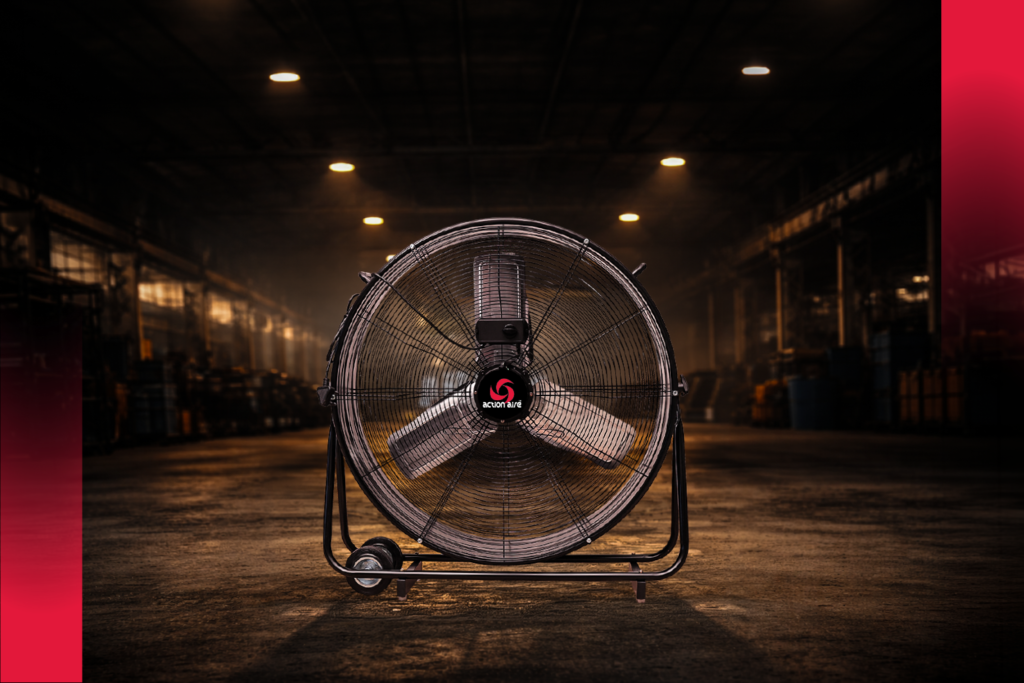
Large factories generate heat, dust, and fumes every single day. Workers struggle to stay productive when air quality drops and temperatures rise. A reliable factory ventilation fan solves this problem by pulling out stale air and pushing in fresh air across wide production floors.
Indian industries face unique challenges. Summer temperatures often cross 40 degrees Celsius in many states. Machines running for long hours add extra heat to already warm factory floors. Without proper airflow, worker fatigue increases and equipment starts to overheat.
This guide explains what makes a ventilation fan suitable for large industrial spaces. It covers airflow requirements, mounting types, safety features, and buying tips that help you choose the right fan for your factory.
Why a Factory Ventilation Fan Matters for Large Industrial Spaces
Poor ventilation creates more than just discomfort. It affects health, safety, and daily output on the shop floor.
Hot, stagnant air traps dust particles and fumes near workstations. Workers breathing this air face headaches, fatigue, and reduced concentration. Over time, this leads to higher absenteeism and lower productivity across shifts.
Heat buildup also damages sensitive machinery. Motors run hotter, bearings wear faster, and electronic components fail sooner than expected. A factory with strong airflow keeps both people and equipment running smoothly.
Fire safety regulations in India also require adequate ventilation in zones that handle chemicals, paints, or combustible materials. Exhaust systems remove harmful vapors before they accumulate to dangerous levels.
Key Features to Look for in a Factory Ventilation Fan
Choosing the right fan for a large factory floor requires more than picking the biggest model available. Several technical factors decide whether a fan actually performs well in your space.
Airflow Capacity (CFM Rating)
CFM stands for cubic feet per minute. This number tells you how much air a fan moves in a given time. Large factories need fans with high CFM ratings to cover wide floor areas effectively.
A small pedestal fan works fine for an office cabin. It fails completely in a 20,000 square foot production hall. Match the CFM rating to your floor size, ceiling height, and heat load before finalizing any fan.
Motor Quality and Durability
Factory fans run continuously, often for 16 to 24 hours a day. The motor needs to handle this load without overheating or breaking down.
Copper winding motors with thermal overload protection last significantly longer than cheaper aluminium alternatives. Class F insulation ratings allow motors to withstand higher operating temperatures common in Indian summers.
Blade Material and Design
Fan blades made from high-grade aluminium sheets deliver better aerodynamic efficiency than plastic or cast blades. Precision-bent blades reduce vibration and noise while moving more air per rotation.
Poorly designed blades wobble at high speeds. This shortens motor life and creates unnecessary noise pollution inside the workspace.
Safety and Protection Features
Rotating fan blades pose a real risk in busy industrial environments. Wire guards with narrow spacing prevent accidental contact between hands, tools, or loose clothing and the blades.
Weatherproof and IP-rated fans protect internal components from dust, moisture, and humidity. This matters most for open sheds, warehouses, and factories located near coastal or humid regions.
Types of Ventilation Fans Used in Indian Factories
Different factory layouts need different fan configurations. Understanding these options helps you build a complete ventilation system rather than relying on a single fan type.
Wall mounted fans work well for fixed positions along production lines. They free up floor space and direct airflow toward specific work zones without blocking movement of workers or machinery.
Pedestal and portable fans offer flexibility for changing layouts. Factories that rearrange equipment frequently benefit from fans that move easily between locations.
Exhaust blowers remove smoke, fumes, and hot air directly from enclosed areas. These units work alongside intake fans to create proper cross ventilation across the entire building.
Hanging drum fans cover large open areas from above. Warehouses and assembly halls with high ceilings often use this configuration for even air distribution without cluttering the floor.
How to Calculate the Right Fan Size for Your Factory
Sizing mistakes lead to poor performance and wasted electricity costs. A structured approach avoids both problems.
Start by measuring the total floor area and ceiling height of your facility. Multiply these figures to get the total air volume in cubic feet.
Industry guidelines recommend 20 to 30 air changes per hour for standard factory environments. Multiply your air volume by the required air changes, then divide by 60 to get the target CFM per minute.
Facilities handling heavy machinery, chemicals, or high heat output need more frequent air changes. Consult technical datasheets or reach out to an experienced supplier for accurate sizing based on your specific operations.
Benefits of Choosing a Reliable Industrial Fan Manufacturer in India
Working with an established industrial fan manufacturer in India brings advantages that go beyond the product itself. Local manufacturers understand regional climate conditions, power supply variations, and factory layouts common across Indian industries.
Domestic production also reduces delivery timelines compared to imported alternatives. Spare parts remain easier to source, and after sales support responds faster to service requests.
Established manufacturers typically offer certifications, custom color options, and export capabilities. This flexibility helps businesses maintain consistent branding while meeting international quality standards when required.
Companies like Action Aire design and manufacture industrial fans in house, covering everything from motor winding to blade balancing under one roof.
Common Mistakes to Avoid When Buying Ventilation Fans
Many factories end up with underperforming ventilation systems due to avoidable errors during the buying process.
Buyers often choose fans based on price alone. Cheaper motors and blades wear out faster, leading to higher replacement costs over the fan’s lifetime. Calculating total cost of ownership gives a clearer picture than the upfront price tag.
Ignoring ceiling height and floor obstructions also causes airflow problems. Fans positioned behind machinery or storage racks lose effectiveness even with strong CFM ratings.
Skipping maintenance schedules shortens fan lifespan significantly. Regular cleaning of blades and motor housings prevents dust buildup that reduces airflow efficiency over time.
Maintenance Tips to Extend Fan Life
Proper maintenance keeps ventilation systems running at full capacity for years. Simple routines make a noticeable difference in performance and energy consumption.
Clean blades and guards every month to remove dust and grease accumulation. Check motor bearings periodically for unusual noise or vibration that signals early wear.
Inspect electrical connections and wiring for damage caused by heat or moisture exposure. Loose connections increase fire risk and reduce motor efficiency over time.
Schedule professional servicing at least twice a year for fans running continuous shifts. This catches minor issues before they turn into costly breakdowns.
Choosing the Right Ventilation Partner for Your Factory
Selecting equipment is only part of the process. The manufacturer or supplier you work with affects installation quality, long term support, and overall system reliability.
Look for suppliers offering detailed datasheets, certifications, and clear CFM specifications for every product. Transparent technical documentation makes comparison between options much easier.
Ask about warranty terms, spare parts availability, and response time for service requests. A dependable partner supports your factory long after the initial installation is complete.
Before finalizing your purchase, explore the complete range of industrial air circulators and exhaust blowers to compare specifications side by side. You can also read more on how to choose the right industrial fan for your factory for additional buying guidance, and check the exhaust blower range if your facility needs dedicated fume and smoke extraction.
Final Thoughts
A well planned ventilation system protects workers, equipment, and daily productivity across any large industrial facility. Matching CFM ratings, motor quality, and safety features to your specific floor layout delivers the best long term results.
Take time to calculate accurate airflow requirements before purchasing any fan. This single step prevents most common ventilation problems that factories face after installation.
Frequently Asked Questions
What CFM rating is needed for a large factory ventilation fan?
Most large factories require fans rated between 15,000 and 40,000 CFM depending on floor area and ceiling height. Facilities with heavy machinery or high heat output often need fans at the higher end of this range. Calculating air changes per hour gives the most accurate figure for your specific space. Consulting technical datasheets before purchase avoids undersized installations that fail to control heat and dust properly.
How many industrial fans does a factory floor need?
The exact number depends on total floor area, ceiling height, and the layout of machinery inside the facility. Wall fans typically cover 800 to 1200 square feet each, while larger drum or exhaust units cover more area. A site survey by the supplier gives the most reliable placement and quantity recommendation for even airflow.
What is the difference between an exhaust fan and an air circulator?
An exhaust fan removes hot air, smoke, and fumes directly out of the building through wall or roof openings. An air circulator moves air within the space to reduce heat pockets and improve overall comfort. Most factories use both types together for complete ventilation coverage.
Are weatherproof fans necessary for Indian factory conditions?
Weatherproof and IP-rated fans are strongly recommended for open sheds, coastal regions, and facilities exposed to dust or moisture. These fans resist corrosion and electrical faults caused by humidity, extending the equipment’s operational lifespan significantly compared to standard indoor models.
How much electricity does an industrial ventilation fan consume?
Power consumption varies by motor size, typically ranging from 0.5 to 3 kilowatts per unit depending on CFM output. BLDC motor fans consume considerably less electricity than standard induction motors while delivering similar airflow, making them a cost effective choice for continuous factory operation.