
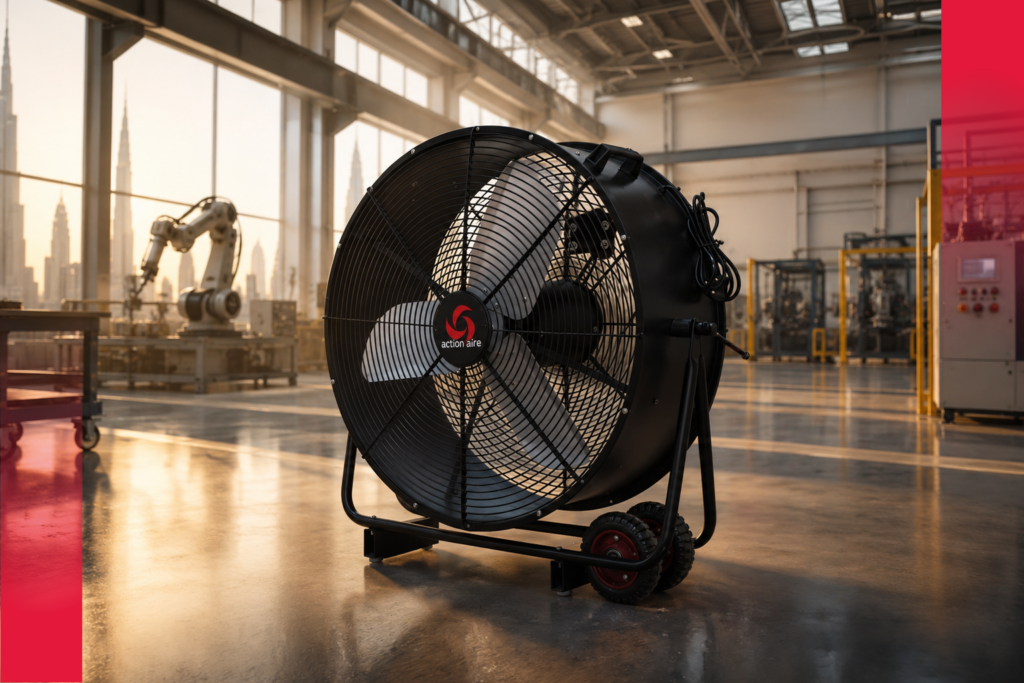
Factory floors get hot fast. Machines run for hours, sunlight beats down on metal roofs, and dozens of workers move around generating body heat. This heat buildup slows people down and creates unsafe working conditions.
An industrial fan for factory floor cooling solves this problem by pushing large volumes of air across the workspace. It keeps temperatures manageable and helps workers stay alert throughout their shifts.
This blog explains why factory cooling matters, how the right fan improves output, and what features to check before buying one.
Why Factory Floor Heat Hurts Productivity
High indoor temperatures affect concentration and physical stamina. Workers exposed to heat for long hours tend to make more mistakes and move slower.
Heat stress also raises the risk of fatigue, dizziness, and dehydration. These conditions can lead to accidents on the shop floor, especially near heavy machinery.
Poor airflow traps fumes, dust, and humidity near the working area. This lowers air quality and adds discomfort on top of the heat already present.
A well planned cooling setup addresses all these issues together. It keeps the air moving, removes trapped heat, and gives workers a safer environment to perform their tasks.
How an Industrial Fan for Factory Floor Cooling Works
Industrial fans move large volumes of air using powerful motors and aerodynamically shaped blades. This airflow carries heat away from machines and people, creating a cooling effect across the entire floor.
Unlike small domestic fans, industrial units cover wide areas with strong, directional airflow. They pull in fresh air and push out stale, heated air continuously.
Many modern units also include tilt adjustment, which lets operators direct airflow exactly where it is needed. This helps target hot zones near furnaces, ovens, or dense machine clusters.
Some factories combine air circulators with exhaust fans for complete ventilation. Circulators keep air moving inside the space, while exhaust fans remove hot air, smoke, and odours entirely.
Benefits of Industrial Cooling Fans on the Shop Floor
Better airflow brings several advantages beyond simple comfort. Here are the main benefits factory owners notice after installation.
Improved worker output. Cooler temperatures reduce fatigue and help employees stay focused for longer stretches. Workers who feel comfortable tend to complete tasks faster and with fewer errors.
Lower absenteeism. Heat related illness is a common reason for missed shifts in summer months. Proper cooling reduces this risk and keeps attendance steady.
Extended machine life. Heat does not just affect people. Overheated equipment wears out faster and needs more frequent repairs. Good airflow protects machinery too.
Safer working conditions. Reduced humidity and better ventilation lower the chances of slips, fatigue related accidents, and heat stress emergencies.
Energy efficiency. Compared to full HVAC systems, industrial fans consume far less power while still cooling large areas effectively.
Choosing the Right Fan for Your Factory Floor
Not every fan suits every factory layout. A few factors decide which model works best for a given space.
Start by measuring the floor area and ceiling height. Larger spaces need fans with higher CFM ratings to circulate air properly across the entire zone.
Check the mounting type next. Wall mounted units work well for fixed installations, while portable and pedestal fans give flexibility to move airflow wherever it is needed most.
Motor quality matters as much as blade design. Look for units with thermal overload protection and durable winding, since factory fans often run continuously for long shifts.
If your facility deals with dust, moisture, or outdoor exposure, choose a weatherproof or IP rated model. These units resist wear better in harsh industrial conditions.
You can browse a full range of heavy duty industrial fans built specifically for continuous factory use, or explore air circulators designed for wide area coverage.
Industrial Fans vs Traditional Cooling Systems
Traditional air conditioning cools enclosed spaces well but struggles in large factory settings. Installation and running costs also climb quickly for big floor areas.
Industrial fans offer a more practical solution for open shop floors. They move large air volumes without the high electricity draw that air conditioning demands.
Maintenance is simpler too. Fans have fewer complex parts compared to AC units, which means less downtime and lower repair costs over time.
For facilities that need both circulation and fume removal, pairing an air circulator with an exhaust blower gives complete ventilation coverage without the expense of central cooling systems.
Best Industrial Fan Manufacturer In India: What Sets a Reliable Supplier Apart
Buying from an experienced manufacturer makes a real difference in fan performance and lifespan. A dependable supplier tests every unit for airflow strength, motor durability, and safety compliance before it reaches the factory floor.
Look for manufacturers who build components in house rather than assembling from generic parts. This usually means better quality control and stronger after sales support.
Certifications also matter. A manufacturer with proper safety and quality certifications gives factory owners confidence that the fans meet industrial standards.
Action Aire has spent over three decades manufacturing industrial air circulators and exhaust fans for factories, warehouses, and large commercial spaces across India and export markets. Every fan is built in house, from motor winding to blade balancing, with a focus on strength and consistent airflow.
Maintenance Tips to Keep Your Fans Running Efficiently
Regular maintenance extends fan life and keeps airflow consistent. A few simple habits go a long way.
Clean blades and guards weekly to prevent dust buildup, which reduces airflow efficiency over time. Dust accumulation also adds strain on the motor.
Check motor sound during operation. Unusual noise often signals bearing wear or loose components that need attention before they cause bigger issues.
Inspect wiring and connections every few months, especially in factories with heavy dust or moisture exposure. Loose connections can lead to overheating or sudden failure.
Schedule professional servicing at least twice a year. This helps catch minor issues early and keeps the fan running at full capacity throughout the year.
Making the Right Investment for Your Factory
Cooling your factory floor is not just about comfort. It directly affects productivity, safety, and equipment lifespan across the entire facility.
An industrial fan for factory floor cooling gives factory owners a cost effective way to manage heat without the burden of expensive HVAC systems. The right setup pays for itself through better output and fewer heat related disruptions.
Before purchasing, assess your floor size, ventilation needs, and budget carefully. Choosing durable, well tested equipment from a trusted source ensures long term performance and fewer replacement costs.
For more guidance on picking the right setup, read our detailed guide on how to choose the right industrial fan for your factory.
Frequently Asked Questions
What is the best industrial fan for factory floor cooling?
The best fan depends on floor size, ceiling height, and airflow needs. Wall mounted circulators suit fixed layouts, while portable units work well for flexible spaces. Always check CFM rating and motor durability before buying.
How many industrial fans does a factory floor need?
This depends on the total floor area and ceiling height. Larger factories usually need multiple units placed strategically to ensure even airflow across every section without leaving hot spots.
Do industrial fans reduce electricity costs compared to air conditioning?
Yes. Industrial fans consume significantly less power than full HVAC systems while still cooling large open spaces effectively, making them a budget friendly choice for factories.
Can industrial fans work alongside exhaust systems?
Yes. Pairing circulators with exhaust fans creates complete ventilation. Circulators move air within the space while exhaust fans remove hot air, fumes, and dust from the building.
How often should factory fans be serviced?
Factory fans should be serviced at least twice a year. Regular cleaning and inspection prevent dust buildup, motor strain, and unexpected breakdowns during peak production periods.