
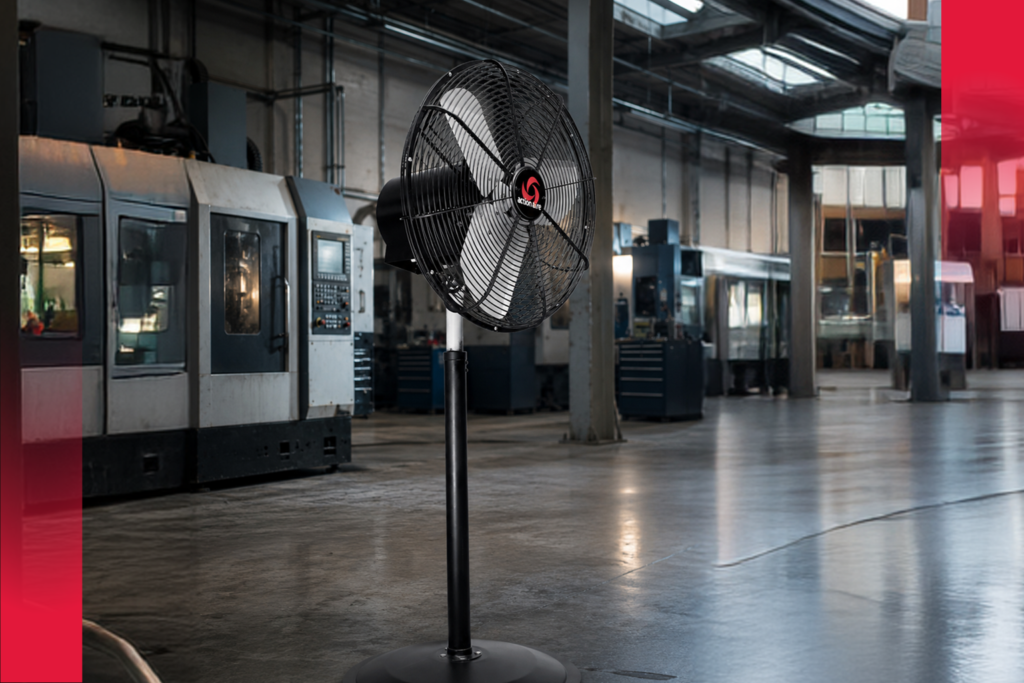
Indian factories face a tough climate challenge every year. Summer heat, humidity, and poor airflow inside large production halls slow down workers and damage machinery. Many plant managers still rely on outdated cooling setups that consume high power and deliver weak results. This is where a reliable Industrial Air Circulator Fan changes the game for manufacturing units across the country.
Factories in states like Gujarat, Maharashtra, Uttar Pradesh, and Tamil Nadu often run multiple shifts through peak summer months. Without proper air movement, heat gets trapped near ceilings and machines, creating uncomfortable and unsafe working conditions. A well-designed circulator fan pushes this trapped air out and pulls in fresher air, keeping the entire shop floor comfortable throughout the day.
Why Indian Factories Need an Industrial Air Circulator Fan
Factory floors are not like office spaces. They have high ceilings, heavy machinery, and constant heat generation from production processes. Standard fans simply cannot handle this load.
An industrial air circulator fan is built differently. It moves large volumes of air across long distances, breaking up hot pockets that form near furnaces, presses, and assembly lines. This steady air movement lowers the perceived temperature on the floor, even without dropping the actual room temperature.
Workers stay more alert and productive when air keeps moving around them. Heat fatigue reduces, concentration improves, and the number of shift-related errors drops. For factory owners, this translates directly into better output and fewer safety incidents.
How an Industrial Air Cooling Fan Improves Daily Operations
An industrial air cooling fan does more than just push air. It supports several operational goals that matter to plant managers every single day.
First, it helps control humidity buildup in closed production areas. Moist air trapped inside a factory can damage raw materials, packaging, and electronic components. Constant circulation keeps humidity levels balanced.
Second, it protects sensitive machinery from overheating. Motors, control panels, and electrical systems perform better in a cooler, well-ventilated environment. This reduces breakdown frequency and extends equipment life.
Third, it improves air quality by reducing the concentration of dust, fumes, and odors that build up during manufacturing. Cleaner air on the floor supports better health outcomes for the workforce.
Key Features to Look for in an Industrial Air Circulator Fan
Not every fan sold in the market can survive the demands of a busy factory floor. Buyers should check a few critical features before making a purchase decision.
Airflow capacity matters the most. Look for fans rated in CFM or m³/hr that match the size and ceiling height of your production area. A fan with weak airflow will not solve the heat problem, no matter how many units you install.
Motor quality decides how long the fan runs without failure. Fans built with Class F copper winding and thermal overload protection handle continuous industrial duty cycles far better than cheaper alternatives.
Blade construction also plays a role in performance. Precision bent aluminium blades move air more efficiently than molded plastic blades, and they hold their shape under constant vibration and load.
Mounting flexibility helps too. Factories often need wall mounted, pedestal, or portable options depending on the layout of each section. A good industrial air circulator range should offer multiple mounting choices to fit different floor plans.
Energy Efficiency and Cost Savings
Rising electricity costs push most factory owners to look for equipment that delivers strong performance without draining power. A well-engineered industrial air circulator fan runs on far less energy compared to full HVAC systems while still covering large open areas effectively.
This makes it a practical choice for factories that want year-round comfort without the heavy installation and running costs of centralized air conditioning. Over time, the savings on power bills add up significantly, especially in units running multiple shifts across the year.
Maintenance costs also stay lower. Circulator fans have simpler mechanical designs compared to cooling towers or split systems, which means fewer breakdowns and quicker repairs when something does go wrong.
Choosing the Right Industrial Air Circulator Fan for Your Space
Selecting the correct fan depends on a few practical factors that every buyer should evaluate before placing an order.
Start with the total floor area and ceiling height of the space. Larger areas need higher CFM ratings and possibly multiple units placed strategically around the floor. Next, consider the nature of the work happening in that zone. Areas near furnaces or heat-generating machines need stronger airflow than general assembly zones.
Outdoor or semi-open sections require weatherproof and IP-rated fans that can handle dust and moisture exposure. Indoor sections can use standard heavy duty models built for continuous operation.
It also helps to check how the equipment performs across different industries, since requirements can vary widely between sectors like automotive, textile, warehousing, and food processing. Reviewing this guide on industrial cooling needs by industry can help narrow down the right specification faster.
Installation and Placement Tips for Better Results
Even the best fan underperforms if it is placed incorrectly. Airflow should move in a continuous pattern across the floor rather than getting blocked by machinery, storage racks, or partitions.
Wall mounted units work well when placed at a height that directs air across the working zone rather than straight down. Pedestal and portable units give more flexibility since they can be repositioned as production layouts change.
For very large halls, a combination of fixed and portable units usually delivers the most even coverage. Placing units near heat sources first, then filling gaps with additional fans, tends to produce the best temperature balance across the entire floor.
Durability Matters in Industrial Environments
Factory equipment faces constant vibration, dust, and sometimes exposure to chemical fumes. A fan built for home or office use simply will not survive this environment for long.
Industrial grade fans use stronger frames, protective guards, and sealed motor assemblies designed to withstand rough daily use. Fan guards with narrow wire spacing also protect workers from accidental contact with moving blades, which matters a great deal for factory safety compliance.
Buyers should always check for proper certifications and quality testing before finalizing a supplier. This confirms the equipment meets recognized safety and performance standards for industrial use.
The Business Case for Upgrading Factory Cooling
Heat related productivity loss is a real cost that many factories underestimate. Workers slow down, error rates climb, and absenteeism rises during peak summer months. Upgrading to a proper industrial air circulator fan addresses this problem directly without requiring a full facility redesign.
The return on investment shows up quickly through improved output, fewer equipment failures, and better working conditions that support employee retention. For growing manufacturing units, this upgrade often pays for itself within a single peak season.
Companies planning a facility expansion or a new production line should factor in proper air circulation from the design stage itself. Retrofitting later is possible but tends to cost more and takes longer to plan around active operations.
Final Thoughts
Factory cooling is not a luxury anymore. It is a core part of running a safe, productive, and efficient manufacturing operation in India’s climate. An industrial air circulator fan offers a practical, energy efficient way to solve heat problems without the heavy cost of full air conditioning systems.
Action Aire brings over three decades of manufacturing experience to this space, building fans engineered for the demands of Indian factory floors. If you are planning your next cooling upgrade, exploring the right product range and reading more on our blog can help you make a well informed decision, or you can reach out directly through our contact page for a customized recommendation.
Frequently Asked Questions
What is an industrial air circulator fan used for?
An industrial air circulator fan moves large volumes of air across factories, warehouses, and production halls. It breaks up trapped hot air near ceilings and machinery, keeping the floor cooler and more comfortable. This supports worker productivity and protects sensitive equipment from overheating during long shifts.
How is an air circulator different from an exhaust fan?
An air circulator moves air within a space to improve comfort and reduce heat buildup. An exhaust fan removes hot air, smoke, or fumes completely from the building. Many factories use both together for complete ventilation coverage across different zones.
What size industrial fan does my factory need?
Fan size depends on floor area, ceiling height, and required airflow measured in CFM or m³/hr. Larger halls with high ceilings need stronger units or multiple fans placed strategically. Consulting a supplier with your floor dimensions gives the most accurate recommendation.
Can industrial fans be used in outdoor or dusty areas?
Yes, weatherproof and IP-rated industrial fans are built specifically for outdoor or dusty environments. These models resist moisture, dust, and harsh conditions while maintaining consistent airflow performance throughout the year.
Do industrial circulator fans help reduce electricity costs?
Yes, these fans consume far less power than full air conditioning systems while still covering large open spaces effectively. This makes them a cost efficient choice for factories running multiple shifts across changing seasons.